

A professional services license in Qatar is not a one-size-fits-all permit. Your registered activities, legal structure, and any required approvals determine the licensing route. A valid lease agreement or proof of office space is required before commercial registration can be issued.
Treat licensing as more than a form submission. Your activity description, company structure, government approvals, and office arrangements need to align. This guide explains how those choices shape the application, which government steps may apply, and why regulated activities can require additional approvals. It also covers the records and office evidence needed for registration, how the process moves from preparation to submission and follow-up, and where professional support can help keep setup organized. The aim is to clarify key decisions before your business begins operating in Qatar, so you can build a compliant foundation and avoid preventable gaps.
Key Takeaways
- Align your proposed activities with the company’s legal structure so the licensing route fits the services you plan to provide.
- Plan for office documentation and any sector-specific approvals as part of the registration process, not as afterthoughts.
- Understand how document preparation, government submissions, and follow-ups work together to move an application forward.
- Review eligibility around your activities and setup, then use professional support to coordinate the formation and approval steps.
Government documentation, approvals, and legal procedures
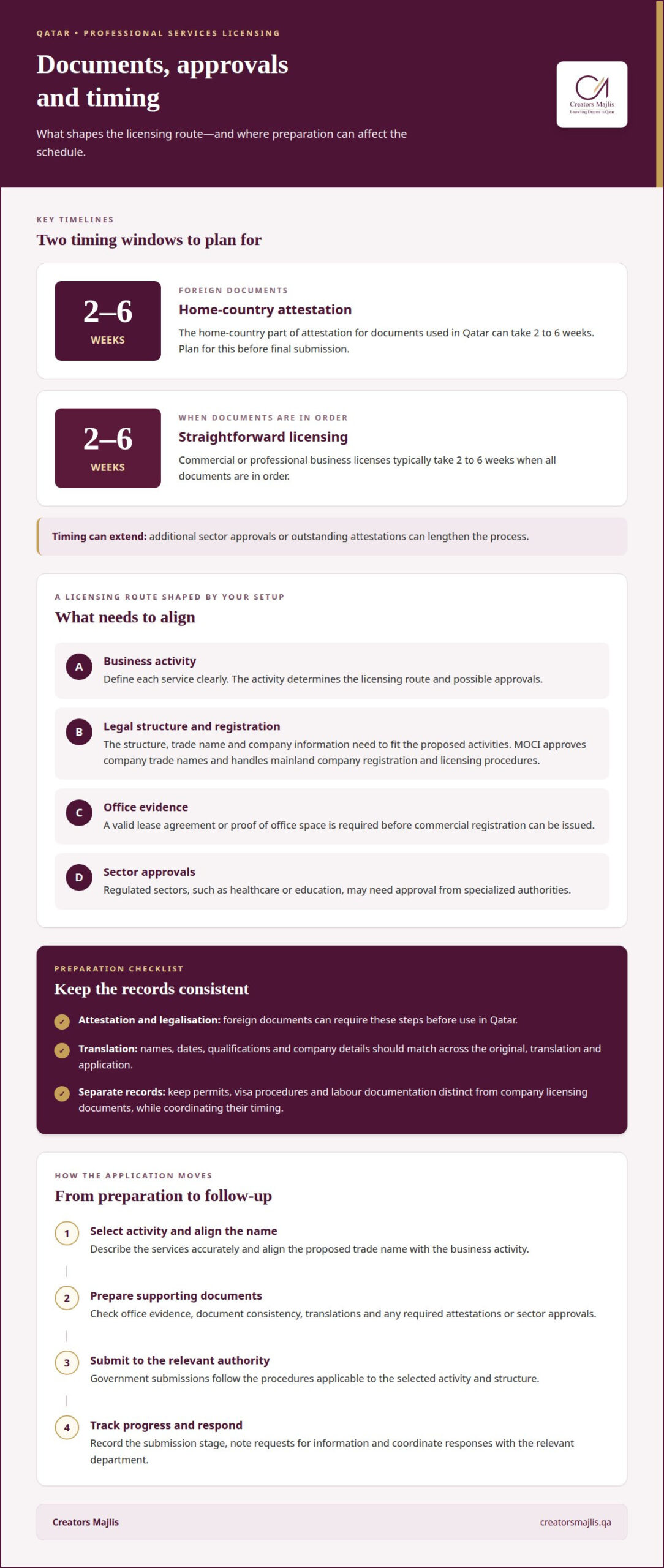
A professional services license in Qatar depends on accurate company information and the right supporting documents. A valid lease agreement or proof of office space is required before commercial registration can be issued. The Commercial Registration certificate establishes the company as a legal entity and is a central step in the process.
Government coordination connects document preparation with official submissions and approvals. The Ministry of Commerce and Industry (MOCI) approves company trade names in Qatar. Once the proposed name and business activity are aligned, the application can proceed through the relevant registration and licensing procedures. Businesses in regulated sectors, such as healthcare or education, may also need approval from specialized authorities.
Foreign documents can require attestation and legalisation before use in Qatar. Attestation verifies a document through the relevant authorities, while legalisation prepares it for recognition in another jurisdiction. The home-country part of document attestation for use in Qatar can take 2 to 6 weeks. That step can affect the wider schedule, so it belongs in the application plan, not at the final submission stage.
Translation requires careful attention to detail. Names, dates, qualifications, and company details should match across the original document, its translation, and the application. For example, a different spelling of an applicant’s name on a translated professional certificate can prompt avoidable questions during review. Consistent records help officials assess what each document supports.
Government submissions may also involve permits, visa procedures, or labour documentation when employee arrangements are part of the setup. Keep those records distinct from company licensing documents, while coordinating their timing. Straightforward commercial or professional business licenses typically take 2 to 6 weeks when all documents are in order. Additional sector approvals or outstanding attestations can extend the process, so complete and organized documentation matters from the start.
Choosing business activities and legal structure
Define each service clearly before choosing a structure: the activity determines the licensing route and possible approvals. Mainland and free zone options also shape registration and operating arrangements.
Mainland and Free Zone Guidance
Mainland and free zone options suit different business plans, so compare the proposed activities, intended clients, and operating needs. Qatar allows 100% foreign ownership in many sectors under its investment law. That possibility doesn’t remove the need to match the company’s activities with the relevant licensing requirements. A partner or ownership arrangement should fit the chosen structure.
Company formation connects the selected structure to trade name approval, registration, and licensing. For example, a consultancy should describe its actual advisory work instead of using a broad label that obscures its services. Accurate activity details help ministries assess the application and reduce avoidable delays. After setup, changes to activities or company details may require amendments, and licences need renewals to remain current.
Eligibility and Licensing Process
For mainland registration, the Ministry of Commerce and Industry (MOCI) approves trade names and handles company registration and licensing procedures. The relevant authority and additional approvals depend on the selected activity; regulated sectors may involve specialized authorities. Eligibility therefore depends on the business activity, legal structure, and supporting documents.
The process generally moves from activity selection and name approval to document preparation, government submission, and follow-up. A valid lease agreement or proof of office space is required before commercial registration can be issued. Straightforward commercial or professional business licences typically take 2 to 6 weeks when documents are in order.
Registration and licensing costs depend on the activity, structure, and approvals involved. The cost is determined case by case and provided after a quote request; the activity scope and setup requirements shape it. To plan a professional services licence in Qatar around your business model, discuss your setup requirements.
Government submissions and application tracking
Government liaison turns prepared paperwork into coordinated submissions to the relevant authorities. In Qatar, PRO services can support immigration, licensing, labour, and regulatory procedures. The work may include submitting documents, communicating with government departments, tracking application progress, and following up on pending approvals. Clear ownership of each step helps keep a business setup moving.
For a trade licence application, the representative organizes the required information and submits it through the applicable government process. If an authority requests clarification, the response should address the request directly and match the original application. For example, the company’s activity description should remain consistent across licensing records and supporting documents.
Application tracking involves more than checking whether a file has been received. Record the submission stage, note requests for further information, and coordinate responses with the relevant department. This gives founders a clearer view of outstanding tasks, such as updating a document or obtaining an additional regulatory approval, without confusing separate applications.
Government procedures can continue after initial licensing. PRO Services may cover licence renewals, work permits, visas, and document attestation. During employee onboarding, immigration and labour procedures may need coordination alongside company compliance records. Keeping each employee’s application separate from the company’s licensing file helps prevent administrative details from getting mixed up.
For ongoing compliance, track renewals for licences, visas, Qatar IDs, and government registrations. A representative can monitor status, prepare submissions, and follow up with authorities when an application needs attention. Administrative coordination does not transfer legal responsibility from the company, which remains accountable for accurate information, required approvals, and meeting its obligations.
What are the eligibility requirements for a professional services license in Qatar?
Eligibility starts with the service the company intends to provide. In Qatar, a professional licence applies to consultancies, service providers, and professional practices. The activity description should reflect the actual work, rather than a broader category that could suggest different services. This helps identify the appropriate registration route and whether activity-specific approvals apply. A consultancy offering management advice, for example, should describe that work clearly in its application.
The proposed legal structure and ownership also shape the assessment. Many sectors in Qatar allow 100% foreign ownership under the country’s investment law. According to the Ministry of Commerce and Industry, there is no general minimum capital requirement for a limited liability company. That rule concerns general minimum capital; the activity and chosen structure still guide the setup requirements. Applicants should align the ownership arrangement, company documents, and declared activities before submission.
Regulated activities may require more than standard company registration. Healthcare, education, and industrial businesses may need additional approvals from specialized authorities. Before finalizing the activity list, identify whether the proposed work falls within a regulated sector. Required approvals depend on the nature of the services, not simply the company’s preferred name. Accurate descriptions help distinguish a standard consultancy from services that need sector oversight.
Supporting records should consistently identify the applicant, company, and proposed activities. For example, qualifications or agreements submitted for a professional practice should relate clearly to the services described in its application. The licensing review can then consider the structure, activity, and applicable approvals together. A professional services licence in Qatar is best planned around those criteria, rather than assumed to follow one universal checklist. Discuss your licensing eligibility to clarify the next steps for your proposed setup.
Creators Majlis: PRO Services
Creators Majlis supports Company Formation and PRO Services for businesses setting up in Qatar. PRO Services include support with document attestation, certified translations, amendments, filings, and licence renewals, helping connect administrative procedures with your licensing application.
Turn to Creators Majlis when you need support aligning company formation with government requirements or coordinating residency procedures as your setup progresses. A single adviser handles each mandate from initial assessment through annual return, with multilingual advice and a written recommendation before filing. This support is particularly useful when several submissions or approvals need coordination.
For guidance on your setup and next steps, contact Creators Majlis.
Set your Qatar business up for its next stage
Licensing decisions can shape how you develop your services, build client relationships, and plan future growth. Treat setup as the foundation for the business you intend to operate, not simply a formality before launch. A professional services license in Qatar should reflect your actual business model and provide a clear path from formation to operation.
Creators Majlis can support that next step through Company Formation, PRO Services, and Business Set Up in Qatar. With coordinated guidance, you can move from planning your activities to organizing the administrative work that brings the business into operation. The right time to seek support is while your setup decisions are taking shape, especially when you want the licensing process and company structure to work together.
Contact Creators Majlis to discuss your Qatar business setup and take the next step with clarity.
Frequently Asked Questions
Will my business stay compliant with Qatar regulations?
Compliance depends on keeping licensed activities aligned with the company’s actual work and meeting applicable approval, filing, and renewal requirements. For example, adding an advisory service may affect the registered activity and require an amendment. PRO Services can coordinate filings and renewal tracking, while the business remains responsible for operating within its approvals and maintaining accurate company information.
What does a professional services license allow in Qatar?
A professional services license in Qatar authorizes a company to provide the professional activities included in its approved scope. Registered activities define what the company may offer, so the scope should reflect its business model. For example, a consultancy planning to advise clients on management should include that service in its activity description and licensing application.
Which professional activities require a license in Qatar?
Consultancies, service providers, and professional practices fall within the professional licensing category. A professional services license in Qatar must reflect the proposed work, since management consultancy and a regulated clinical service may follow different approval paths. Healthcare and education may require additional approval from specialized authorities. The planned work, not just the company’s chosen name, determines which licensing and regulatory steps apply.
Can foreign investors own 100% of a professional services company in Qatar?
Yes, 100% foreign ownership is permitted in many sectors in Qatar, but it does not apply automatically to every activity or setup route. The proposed business activity and legal structure determine the applicable ownership conditions. For example, a consultancy and a business in a restricted sector may face different requirements. Assess the activity and structure together before settling the ownership arrangement.
What documents should I provide to a professional services licensing provider in Qatar?
Prepare information that helps assess the proposed activity, ownership, structure, and operating location. This may include company and owner identification records, a clear description of services, formation documents, and lease or office-space evidence. Add records relevant to the activity, such as professional qualifications where applicable. Foreign documents may also need attestation or legalisation before submission.
How do Qatar mainland and free-zone licenses compare for professional services?
Neither route is automatically the better fit. Compare the activities each platform can register, the approvals required, and how each setup supports your intended operations and client base. Qatar’s business platforms include mainland, the Qatar Financial Centre, and free zones. Choose a route based on your services, structure, and operating plans, not ownership alone.