

The most attractive Qatar setup route on paper may be the wrong fit for your holding company’s purpose. If you’re considering setting up a holding company in Qatar, start by defining what it needs to own, manage, or support. Then assess which jurisdiction can accommodate those activities.
It’s understandable to focus first on incorporation steps. But choosing between the Qatar Financial Centre (QFC), Qatar Free Zones Authority (QFZA), and Mainland Qatar can shape how your structure operates. Compare the routes before preparing an application. Eligibility and permitted activities aren’t universal, so check current requirements with the relevant authority.
This 2026 guide helps you assess whether a holding structure matches your business objectives, compare the three setup routes, and prepare informed next steps. It also includes a preparation checklist covering documentation, compliance, and banking considerations. Use it to identify questions to resolve before proceeding, rather than assuming a route or structure will be accepted.
Key Takeaways
- Clarify what your holding company is intended to own or manage before comparing incorporation routes.
- Assess QFC, QFZA, and Mainland Qatar against your proposed activities, then verify eligibility and current requirements with the relevant authority.
- Use a balanced decision framework to test whether a holding structure fits your objectives, operational plans, and ongoing responsibilities.
- Prepare for setting up a holding company in qatar by defining your objectives, listing proposed activities, and noting route, documentation, and banking questions.
- Bring clear information to an initial discussion and understand how company formation support can help you plan next steps, without guaranteeing approval.
What Does Setting Up a Holding Company in Qatar Involve?
A holding company is generally an entity created mainly to own interests in other companies or assets, rather than to sell goods or provide services directly. That’s a general definition, not a substitute for Qatar’s legal wording or the rules of a particular jurisdiction. The Holding company overview provides broader context. Before acting, confirm how the relevant Qatar authority defines and permits the structure you’re considering.
In practical terms, a holding entity may organize ownership of business interests while operating companies carry out activities such as trading or delivering services. The distinction isn’t always absolute: an entity may have more than one activity if its approved scope and applicable rules allow it. Treat this as general information, and verify the proposed structure with the relevant authority or a qualified legal adviser.
What business objectives can a holding structure serve?
Start by listing what you want the structure to hold or organize. Note the companies, ownership interests, or other assets you may place under it, then state the business purpose, such as coordinating ownership across a group or separating ownership planning from day-to-day operations. These are objectives to assess, not permissions granted by choosing a particular company type. A holding structure doesn’t automatically reduce tax, business risk, or administrative responsibilities.
As you assess setting up a holding company in qatar, test the plan against your ownership arrangements, proposed activities, and preferred setup route. Qatar’s routes have different frameworks, so don’t assume an activity or structure accepted in one is automatically permitted in another. Confirm current eligibility, activity scope, ownership rules, and application requirements with the authority responsible for the route.
When should you assess a different company structure?
Ask whether the proposed entity will primarily hold interests, conduct operations, or do both. If it will trade or provide services itself, examine its activity scope closely. Another company form could better match the operating plan, depending on the activities and jurisdiction. Verify the details before settling on a route.
If your plan centers on an operating business rather than ownership, include LLC company formation in Qatar in your comparison. Define the intended role of each entity before comparing QFC, QFZA, and Mainland Qatar. Incorporation alone doesn’t prove that a structure is suitable or approved.
Compare QFC, QFZA, and Mainland Qatar Before Choosing a Route
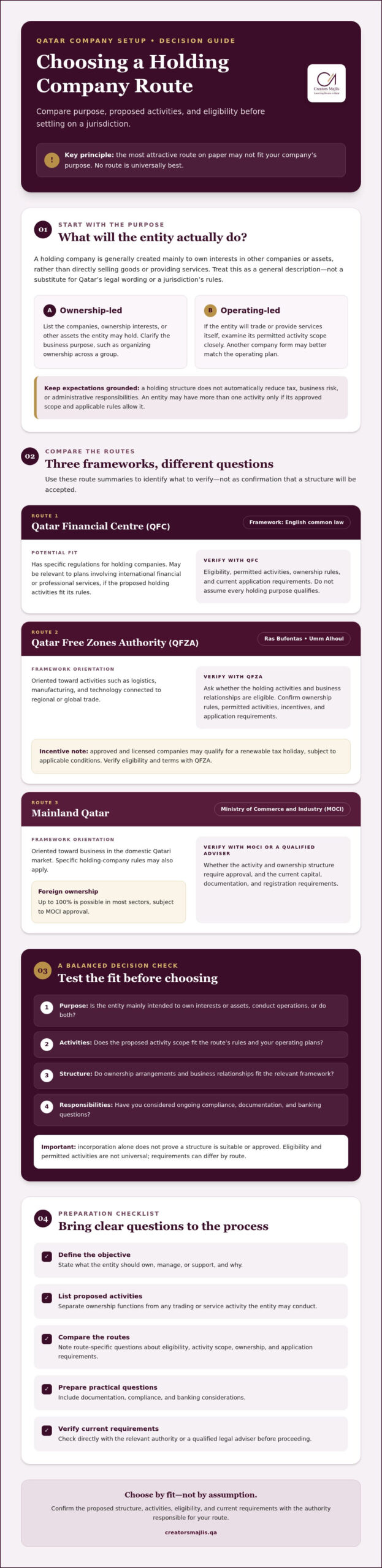
There’s no universally best jurisdiction for a holding company. The right route depends on your intended activities and business relationships, as well as verified eligibility and application requirements. Use this comparison to identify what to check, not as confirmation that a particular structure will be accepted.
| Route | General framework and potential fit | What to verify |
|---|---|---|
| Qatar Financial Centre (QFC) | The QFC has a framework based on English common law and specific regulations for holding companies. It may be relevant to plans involving international financial or professional services, but the proposed holding activities must fit its rules. | Confirm eligibility, permitted activities, ownership rules, and current application requirements directly with the QFC. Don’t assume every holding purpose qualifies. |
| Qatar Free Zones Authority (QFZA) | QFZA regulates Ras Bufontas and Umm Alhoul. Its framework is oriented toward activities such as logistics, manufacturing, and technology connected to regional or global trade. Approved and licensed companies may qualify for a renewable tax holiday, subject to applicable conditions. | Ask QFZA whether your proposed holding activities and business relationships are eligible. Verify ownership rules, any applicable incentives, permitted activities, and application requirements with the authority. |
| Mainland Qatar | The Ministry of Commerce and Industry (MOCI) route is oriented toward business in the domestic Qatari market. Foreign ownership of up to 100% is possible in most sectors, subject to MOCI approval; specific holding-company rules may also apply. | Check whether the activity and ownership structure require approval, and confirm current capital, documentation, and registration requirements with MOCI or a qualified adviser. |
What should you compare across Qatar setup routes?
Look beyond headline benefits. Map the proposed activities, the entities or assets the company will hold, and its intended relationships with local and international businesses. Then compare operational needs, regulatory obligations, and the rules that apply to each activity. If a legal distinction is unclear, flag it for expert review rather than filling the gap with an assumption. Requirements can change, so check current details with the relevant authority before relying on them.
How can you shortlist a suitable route?
Start with your structure and activity plan, then note which routes need eligibility checks. If the entity will operate as well as hold interests, compare the requirements for an operating structure, including Qatar LLC formation guidance. A wider commercial assessment can help test whether the proposal supports your business objectives. To discuss questions about QFC, QFZA, and Mainland Qatar, you can speak with a company formation adviser.
Is a Qatar Holding Company the Right Fit for Your Business?
Incorporation alone doesn’t confirm that a holding structure suits your objectives or that the proposed activities will be approved. Treat the decision as a planning exercise first: define what the entity is meant to own or organize, then verify whether the selected Qatar route permits those activities and what responsibilities follow.
An entity intended to hold interests in several operating businesses has a different role from one that will also sell products or provide services. That distinction can affect which rules and approvals need review. As you consider setting up a holding company in qatar, separate your business rationale from questions of legal permission, tax treatment, and regulatory compliance. Those questions may require advice from appropriately qualified professionals.
Which questions should investors answer before proceeding?
Write down the intended structure before choosing a route. Be specific about what you want the entity to hold, who will own it, and how it will relate to any operating businesses. Then identify what it may do in practice, not just what you intend to call it.
- Purpose: What business objective should the structure support?
- Interests: Which companies, ownership interests, or assets are intended to sit within it?
- Activities: Will the entity only hold interests, or will it also conduct operations?
- Relationships: What dealings or support arrangements are expected between the entity and other businesses?
- Responsibilities: What reporting, compliance, and administrative duties may apply under the chosen route?
Confirm route-specific obligations with the relevant authority. Refer unresolved legal or tax questions to qualified advisers rather than relying on general setup information. Ownership plans and expected tax outcomes also need case-specific review. Don’t treat them as guaranteed results of incorporation.
What are the trade-offs of a holding structure?
A separate entity may give a group a defined way to organize ownership, but it can also add complexity. Depending on the arrangements and applicable rules, you may need to coordinate records, responsibilities, and compliance across more than one entity. Confirm what applies before weighing the practical workload against the intended strategic value.
Test the proposal against a simpler alternative. If the entity will mainly operate a business, a holding-company layer may not align with its core activity. If it will hold interests, document why that arrangement supports your plans and examine the obligations it creates. A clear rationale is a stronger starting point than assumptions about tax savings, liability protection, or easier administration. Make the structure serve the business case. If any of the operating businesses under the holding structure will sell goods or services online, also review the e-commerce business license Qatar requirements to understand how activity licensing and platform obligations interact with your overall structure.
How to Prepare for Setting Up a Holding Company in Qatar
Preparation helps you approach the relevant authority with a clearer plan, but it isn’t the same as completing formal procedures. Start with your intended purpose, then verify the selected route’s current eligibility, permitted activities, documents, approvals, fees, and processing times. These details can differ by jurisdiction and should not be assumed to apply universally.
What information should you organize first?
Build a concise outline of the proposed structure and business rationale. Describe what the company will hold, what activities it may conduct, who the proposed owners are, and how it may relate to other entities. Ask the relevant authority or a qualified adviser to confirm the eligibility rules and supporting documents that apply. Treat any preliminary document list as a working draft until it’s verified for your route.
Use this sequence to move from planning toward formal inquiries. These are preparation tasks, not a substitute for an authority’s application process.
- Define objectives and activities. Record what the company should own or organize, and whether it will also conduct operations.
- Map the proposed structure. Identify intended owners, related entities, and expected business relationships.
- Shortlist a route. Compare QFC, QFZA, and Mainland Qatar, then ask the relevant authority or qualified adviser to confirm whether your activities and ownership plan may be eligible.
- Verify procedural requirements. Request route-specific confirmation of documents, approvals, fees, and processing times before preparing or submitting an application.
- Plan for ongoing responsibilities. Establish which compliance and administrative obligations may apply once the structure and route are confirmed.
| Preparation task | Who to consult | Verification status |
|---|---|---|
| Confirm activity scope and eligibility | Relevant authority or qualified adviser | To verify for the shortlisted route |
| Confirm required documents and approvals | Relevant authority or qualified adviser | To verify before application |
| Check fees and processing times | Relevant authority | To verify using current information |
| Review compliance responsibilities | Relevant authority or qualified adviser | To confirm against the proposed structure |
How do compliance and banking preparation fit in?
Compliance planning should follow the structure and obligations confirmed for your chosen route. Keep unresolved legal or tax questions separate and raise them with appropriately qualified professionals. Banking preparation is another workstream: Corporate Bank Account Opening support can help with preparing documentation and navigating banking procedures, but it doesn’t guarantee an account or approval.
If government procedures are part of your preparation, review the information on PRO services in Qatar. For help organizing route questions and setup preparation, contact Creators Majlis about your Qatar company formation plans.
Choose Your Qatar Setup Support and Take the Next Step
A useful discussion starts with a clear picture of your plans. Before speaking with a company-formation adviser, gather your business objectives, proposed activities, intended ownership structure, shortlisted route, and questions you couldn’t resolve. This gives the conversation a practical focus and helps identify which points need confirmation from an authority or qualified professional.
What can a company-formation adviser help you clarify?
Creators Majlis LLC provides Company Formation support across the Qatar Financial Centre (QFC), Qatar Free Zones Authority (QFZA), and Mainland Qatar. As a QFC-licensed corporate advisory firm, it can help you compare setup routes and organize your preparation. That support doesn’t guarantee eligibility, approval, or a particular outcome. Current activity permissions and application requirements must still be checked with the relevant authority.
Bring concise answers to these questions:
- What should the proposed company own, organize, or do?
- Which activities do you expect it to conduct, and which route are you considering?
- What route-specific requirements, documents, or approvals remain unclear?
- Which questions need an authority’s decision or advice from a qualified legal or tax professional?
Creators Majlis offers personalized support in German, English, and Arabic, alongside Company Formation, PRO Services, Compliance & Regulatory Services, Trademark Registration, Corporate Bank Account Opening, Residency & QID Services, and Corporate Structuring & Organization. These services can support planning and procedural preparation, but decisions on eligibility and approvals remain with the relevant authorities.
What should you ask before engaging support?
Ask how your objectives and proposed activities will be assessed against current requirements for the routes under consideration. Clarify what the adviser can help prepare or explain, what information you’ll need to provide, and which determinations must come from an authority or another qualified professional. This distinction sets realistic expectations and keeps the next steps clear.
For setting up a holding company in qatar, start with an honest summary of your plans, not a fixed assumption about the right structure. Share what you know, flag what you don’t, and use the discussion to identify the checks still required. If you’re ready to discuss your circumstances, contact Creators Majlis about Qatar company formation.
Turn Your Holding-Company Plan Into Clear Next Steps
The strongest starting point is a defined business purpose, not an assumption that a holding structure is automatically the right fit. Before setting up a holding company in qatar, clarify what the entity will own or do, compare QFC, QFZA, and Mainland Qatar against your proposed activities, and verify current eligibility and requirements with the relevant authority.
Keep your objectives, structure, route questions, and unresolved legal or tax issues together for your next planning discussion. Creators Majlis is a QFC-licensed corporate advisory firm providing Company Formation support across QFC, QFZA, and Mainland Qatar. Its personalized support is available in German, English, and Arabic. Advice and preparation can help you assess next steps, while route eligibility and approvals remain subject to the relevant authorities.
Discuss your Qatar company-formation plans with Creators Majlis and bring your questions, even if you haven’t settled on a route. A clear plan can help you identify and verify the next steps.
Frequently Asked Questions
What is a holding company in Qatar?
A holding company is generally an entity set up mainly to own interests in other companies or assets, rather than to conduct day-to-day operating activities itself. In Qatar, the legal treatment and permitted activities depend on the chosen jurisdiction and its current rules. Confirm how the relevant authority defines and regulates your proposed structure before relying on this general explanation or beginning an application.
How do I set up a holding company in Qatar?
Start by defining what the company will own, its proposed activities, ownership plan, and relationship with any operating businesses. Then compare QFC, QFZA, and Mainland Qatar, and verify route eligibility and current requirements with the relevant authority or a qualified adviser. Prepare only the documents, approvals, and other information confirmed for that route. Incorporation is a formal authority process, and preparation doesn’t guarantee approval.
Can a foreign investor set up a holding company in Qatar?
Foreign investors may be able to establish a company in Qatar, but ownership rules depend on the jurisdiction, economic activity, and applicable approvals. The QFC and QFZA allow 100% foreign ownership under their frameworks. On the mainland, foreign ownership of up to 100% is possible in most sectors, subject to Ministry of Commerce and Industry approval. Verify that your proposed holding activities and ownership structure are eligible before proceeding.
Which is better for a holding company in Qatar: QFC, QFZA, or Mainland Qatar?
There’s no universally better route. The QFC has specific rules for holding companies and a framework based on English common law; QFZA focuses on approved activities within its free zones; Mainland Qatar is oriented toward the domestic market and may involve specific holding-company requirements. Compare each route against your intended activities, ownership, and business relationships, then confirm eligibility and current procedures with the relevant authority.
What documents are needed to set up a holding company in Qatar?
There isn’t one document list that can safely be assumed to apply to every Qatar holding-company setup. Requirements can vary by jurisdiction, proposed activities, ownership, and application circumstances. First describe your intended structure and activities, then ask the relevant authority or a qualified adviser to confirm the current documents and approvals for the shortlisted route. Check whether any documents need translation or other preparation before applying.
Does a Qatar holding company need a corporate bank account?
Whether a corporate bank account is required or appropriate depends on the company’s activities, route, and banking needs. Confirm any account-related requirements with the relevant authority and prospective bank rather than assuming incorporation automatically includes an account or guarantees access. Ask what documentation the bank requests for your specific structure. Corporate Bank Account Opening support can help with preparing documentation and navigating banking procedures, but it can’t guarantee an account.
What should I verify before choosing a Qatar holding-company structure?
Verify that the structure fits your objectives and that the chosen route can accommodate the proposed activities and ownership plan. Check current eligibility, permitted activities, ownership rules, application documents, approvals, fees, processing times, and ongoing compliance responsibilities with the relevant authority. Raise unresolved legal and tax questions with qualified professionals. For setting up a holding company in qatar, treat general guidance as a starting point, not confirmation of suitability or approval.